Let’s be honest — choosing the wrong valve can cost you far more than you saved on procurement. A plant shutdown, a fluid leak under pressure, a contaminated batch in a pharma line — these are real consequences that engineers and procurement managers in India face every day when valves underperform.
Stainless steel valves have become the backbone of modern industrial infrastructure. From oil refineries in Gujarat to pharmaceutical plants in Hyderabad, their corrosion resistance, mechanical strength, and longevity make them irreplaceable. But not all stainless steel valves are created equal — and not every type suits every application.
This guide breaks it all down. Whether you’re a plant engineer specifying for a new project or a procurement manager comparing suppliers, this is the resource you need in 2026.
See our complete range of Industrial Valve Products
What Makes Stainless Steel the Material of Choice for Industrial Valves?
Before comparing valve types, it’s worth understanding why stainless steel consistently outperforms other materials in demanding environments:
• Corrosion Resistance: SS 304 and SS 316 grades withstand aggressive chemicals, moisture, and saline environments far better than cast iron or carbon steel.
• Temperature Tolerance: Stainless steel valves operate reliably from cryogenic temperatures (-196°C) to high-heat applications above 600°C.
• Hygienic Properties: The smooth, non-porous surface makes SS valves ideal for food processing, pharma, and dairy industries where contamination is a critical risk.
• Long Service Life: With proper maintenance, stainless steel valves often outlast the equipment they’re installed in, reducing total lifecycle costs.
• Pressure Handling: High-grade SS alloys maintain structural integrity under pressures exceeding 6,000 PSI.
Types of Stainless Steel Valves: Which One Is Right for Your Application?
1. Stainless Steel Ball Valve
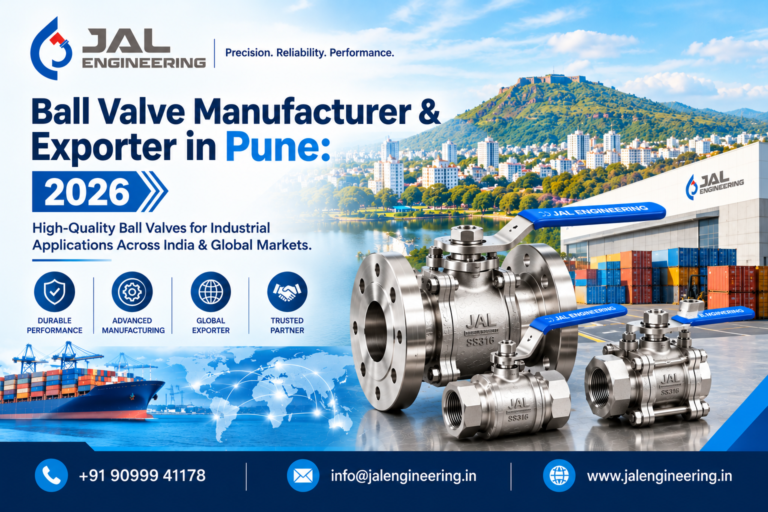
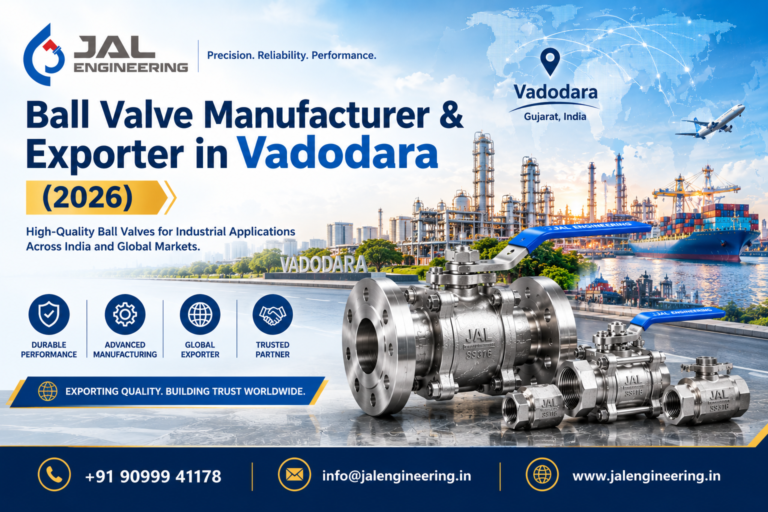
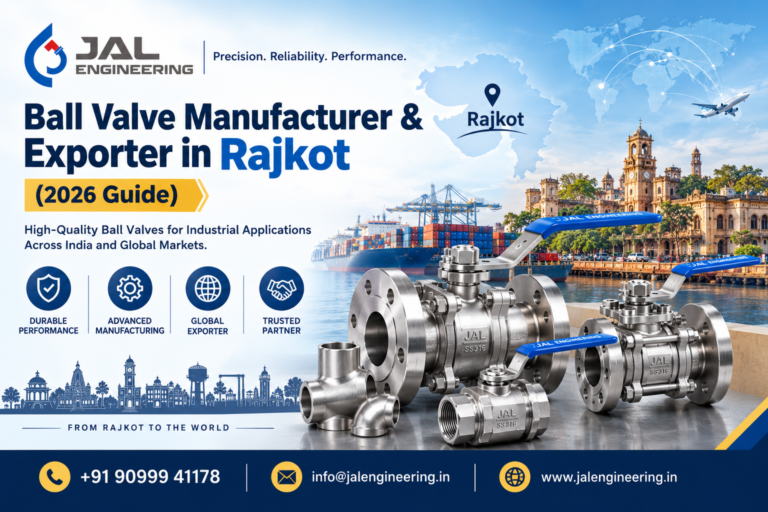
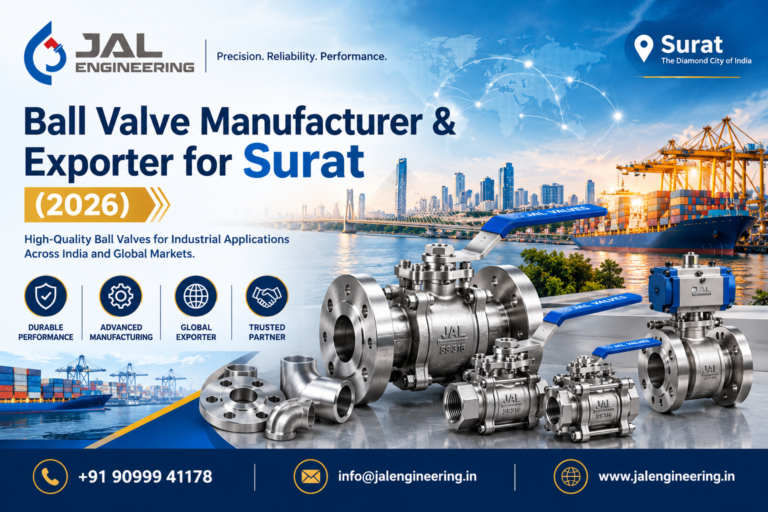
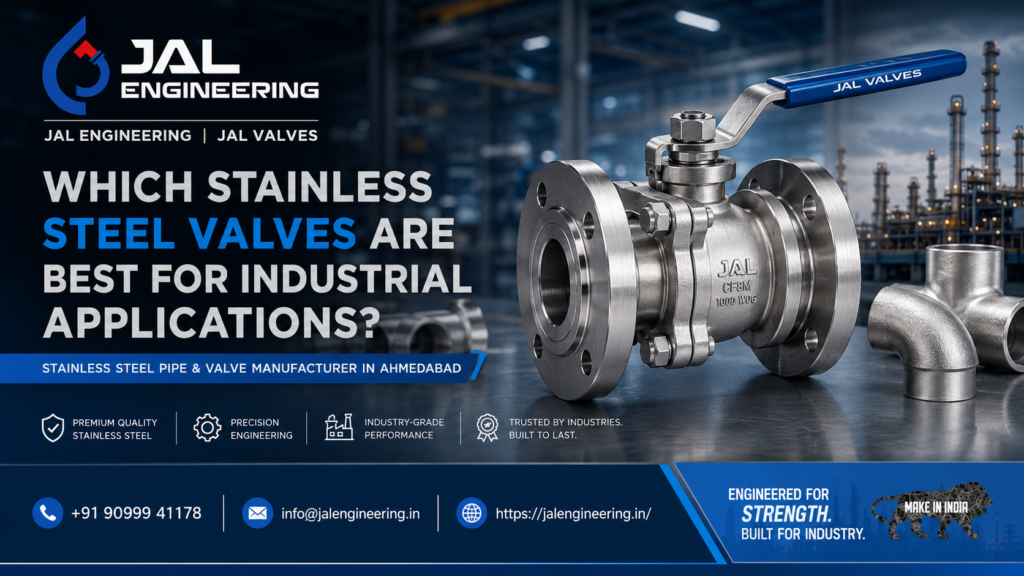
The ball valve is the most widely used industrial valve globally — and for good reason. A simple quarter-turn operation, bubble-tight shut-off, and minimal pressure drop make it the default choice for on/off flow control.
Best for: Oil & gas pipelines, chemical processing, water treatment, LNG terminals, HVAC systems.
• Key advantage: Extremely fast shut-off with low torque.
• Available grades: SS 304, SS 316, SS 316L, Duplex SS.
• Pressure rating: Up to Class 2500 (ANSI/ASME standard).
Jal Engineering manufactures floating ball valves and trunnion mounted ball valves in full bore and reduced bore configurations, engineered for demanding industrial environments across India and export markets.
2. Stainless Steel Gate Valve
Gate valves are designed for full open or full close positions — not flow throttling. They offer minimal flow restriction when fully open, making them ideal for pipelines where pressure drop must be kept as low as possible.
Best for: Water distribution, oil pipelines, marine, power generation.
• Key advantage: Low pressure drop; effective isolation of fluid.
• Available grades: SS 304, SS 316, CF8M.
3. Stainless Steel Globe Valve
When precise flow regulation matters more than just on/off control, globe valves are the answer. The design allows fine-tuning of flow rates, making them essential in process industries where consistency is critical.
Best for: Chemical plants, power systems, steam flow control.
• Key advantage: Excellent throttling capability with precise control.
4. Stainless Steel Check Valve (Non-Return Valve)
Check valves automatically prevent backflow — a critical safety function in pumping systems. They require no manual operation, making them ideal for automated and high-frequency systems.
Best for: Pump outlets, water treatment, sewage systems, chemical transfer lines.
• Key advantage: Automatic operation; protects equipment from reverse flow damage.
5. Stainless Steel Butterfly Valve
Lightweight, compact, and cost-effective — butterfly valves are ideal for large-diameter pipelines where space and budget are constraints. Modern high-performance butterfly valves now handle pressures and temperatures that once required much heavier valves.
Best for: HVAC, water management, food & beverage, general industrial flow control.
6. Stainless Steel Needle Valve
For precise, fine-tuned control of fluid or gas in small-diameter lines, needle valves offer unmatched accuracy. They are commonly found in instrumentation and metering applications.
Best for: Instrumentation panels, flow metering, hydraulic circuits, gas calibration.
Stainless Steel Valve Grades: SS 304 vs SS 316 vs Duplex
Material grade selection can make or break your valve’s performance. Here’s how the most common grades compare:
| Grade | Key Properties | Best For | Relative Cost |
| SS 304 | General corrosion resistance, good formability | Water systems, mild chemicals, food processing | Low |
| SS 316 | Superior chloride & acid resistance (molybdenum added) | Marine, pharma, chemical, coastal environments | Medium |
| SS 316L | Low carbon, better weld integrity | High-temperature welded assemblies, pharma | Medium-High |
| Duplex SS | 2x strength of austenitic SS, pitting resistance | Offshore, seawater, high-stress applications | High |
| CF8M | Cast equivalent of SS 316 | High-pressure castings, industrial flow control | Medium |
Application-Wise Valve Selection Guide
| Industry | Recommended Valve Type | Preferred Grade | Key Parameter |
| Oil & Gas | Ball Valve, Gate Valve | SS 316, Duplex | High pressure, sour gas resistance |
| Chemical Processing | Globe Valve, Ball Valve | SS 316L, Hastelloy | Chemical compatibility |
| Pharmaceuticals | Diaphragm, Ball Valve | SS 316L | Sanitary, crevice-free design |
| Water Treatment | Butterfly, Gate Valve | SS 304, SS 316 | Large diameter, cost efficiency |
| Power Generation | Globe, Gate Valve | SS 316, Alloy Steel | High temp & pressure |
| Food & Beverage | Ball Valve, Butterfly Valve | SS 316L | Hygienic, easy-clean design |
| Marine / Offshore | Ball Valve, Check Valve | Duplex SS, Super Duplex | Saltwater resistance |
2026 Industry Trends: What’s Shaping the Stainless Steel Valve Market?
India’s industrial valve market is projected to cross USD 4.2 billion by the end of 2026. Several key forces are driving this growth:
• Expansion of refineries and LNG infrastructure: India’s push for energy security is driving massive valve procurement for new oil & gas terminals.
• Jal Jeevan Mission and water infrastructure: Government projects are creating sustained demand for large-bore SS gate and butterfly valves.
• Pharma corridor growth in Gujarat & Hyderabad: Stringent FDA and GMP compliance is pushing demand for SS 316L sanitary valves.
• Export demand from Middle East & Africa: Indian manufacturers now supply to 60+ countries, with Ahmedabad emerging as a global valve manufacturing hub.
• Smart valve integration: IIoT-enabled actuated ball valves with remote monitoring are gaining adoption in automated process plants.
• Tighter quality compliance: Buyers are mandating API 6D, API 598, IBR, and ISO 9001 certifications from Indian suppliers.
Buyer’s Guide: How to Choose the Right Stainless Steel Valve Supplier in India
With hundreds of manufacturers across Ahmedabad, Mumbai, and Coimbatore, choosing the right supplier takes more than a quick price comparison. Here’s what experienced procurement managers evaluate:
1. Certifications & Compliance
Look for suppliers certified to ISO 9001, NSIC, IBR (Indian Boiler Regulations), and API standards. These aren’t just badges — they indicate disciplined manufacturing processes and material traceability.
Jal Valves (jalvalves.com) holds ISO 9001, NSIC, and IBR certifications — a trusted exporter serving oil & gas, chemical, water management, and power generation industries.
2. Material Traceability
Every valve should come with MTCs (Material Test Certificates) confirming the grade and chemical composition of the steel used. Don’t accept verbal assurances.
3. Custom Engineering Capability
Standard valve sizes won’t always fit complex plant layouts. A capable manufacturer should offer custom pressure ratings, non-standard end connections, and special trim materials on request.
4. Testing Protocols
Ensure the supplier performs hydrostatic testing, seat leakage testing, and shell testing before dispatch. Reputable manufacturers provide test certificates with every shipment.
5. Export Experience
For international procurement teams, an experienced exporter understands documentation requirements — MSDS, packing lists, COO certificates — and is familiar with global shipping standards.
Why Jal Engineering & Jal Valves Are Trusted Names in India’s Valve Industry
Headquartered in Ahmedabad — India’s valve manufacturing capital – both Jal Engineering and Jal Valves represent decades of industrial expertise, precision manufacturing, and customer trust.
• Jal Engineering: Manufactures a comprehensive range of ball valves, gate valves, globe valves, butterfly valves, check valves, safety relief valves, and strainers. Serves oil & gas, chemical, petrochemical, power, and HVAC industries across India and international markets. Known for competitive pricing without compromising on material quality.
• Jal Valves: ISO 9001, NSIC & IBR certified. Specializes in forged steel, alloy steel, SS 304/316, and duplex steel valves. Primary focus on export markets — supplying precision industrial valves to the Middle East, Africa, Europe, and Southeast Asia.
Together, they represent an end-to-end valve sourcing solution — from small instrument valves to large-diameter industrial shutoffs.
Frequently Asked Questions (FAQ)
Q1: Which stainless steel valve is best for high-pressure industrial applications?
For high-pressure applications, trunnion-mounted ball valves and forged gate valves in SS 316 or Duplex Stainless Steel are the recommended choices. They offer superior pressure ratings — up to Class 2500 (ANSI) — and maintain bubble-tight shut-off even under sustained high-pressure cycles. Always verify the valve’s pressure-temperature rating against your process parameters.
Q2: What is the difference between SS 304 and SS 316 valves?
SS 304 is a general-purpose stainless steel that handles mild corrosion environments well. SS 316 adds molybdenum, giving it significantly better resistance to chlorides, acids, and saltwater. For marine, pharmaceutical, and chemical processing applications, SS 316 or 316L is always the preferred grade.
Q3: Which valve type is best for the oil and gas industry in India?
Ball valves — particularly trunnion mounted designs — are the industry standard for oil and gas applications. They provide reliable shut-off under high pressure and high-temperature conditions, comply with API 6D, and are compatible with sour gas and hydrocarbon media.
Q4: Are Indian stainless steel valve manufacturers reliable for export?
Yes. Ahmedabad and Mumbai-based manufacturers now export to over 60 countries. Look for suppliers certified to ISO 9001, API, IBR, and ASME standards. Companies like Jal Valves (jalvalves.com) have established export track records in the Middle East, Africa, and Europe.
Q5: How do I choose between a ball valve and a gate valve?
Choose a ball valve when you need fast quarter-turn operation, tight shut-off, and minimal maintenance. Choose a gate valve when your priority is a completely unrestricted flow path with minimal pressure drop in a fully open position. Gate valves are not suitable for throttling.
Q6: What certifications should I look for in an industrial valve supplier in India?
For industrial procurement, prioritize suppliers with ISO 9001, IBR (for steam/boiler applications), API 6D/API 598 (for oil & gas), NSIC, and PED (for European export). Material certifications (MTCs) and hydrostatic test reports should accompany every shipment.
Q7: What is a high-pressure ball valve and where is it used?
A high-pressure ball valve is engineered to operate at pressures typically above 1,500 PSI (Class 900 and above). They are used in oil & gas pipelines, high-pressure steam lines, hydraulic systems, and chemical reactors. Trunnion-mounted designs are preferred at high pressures because the ball is mechanically supported, reducing seat wear and torque requirements.Ready to Source the Right Stainless Steel Valves?
Jal Engineering and Jal Valves are trusted valve manufacturers and exporters based in Ahmedabad, India. Whether you need standard SS ball valves, custom high-pressure gate valves, or export-ready industrial valve packages — our team is ready to help.
Contact Jal Engineering: www.jalengineering.in | info@jalengineering.in | +91 90999 41178
Contact Jal Valves: www.jalvalves.com
Request a free quote today. Delivery across India and international export available.