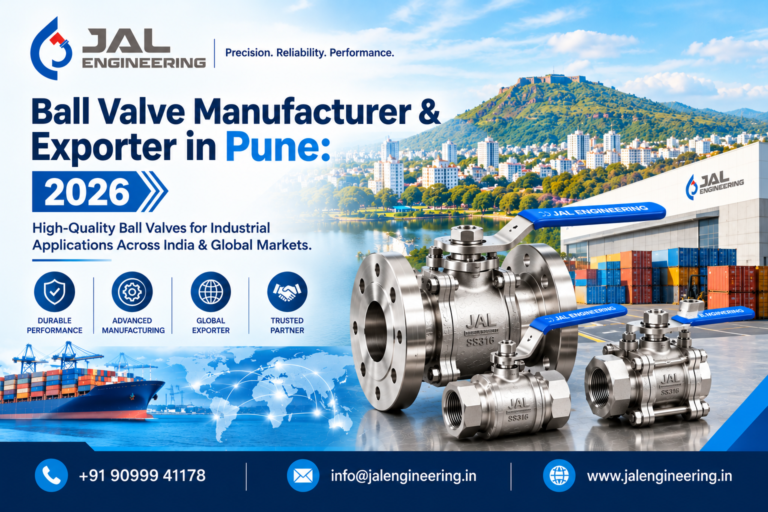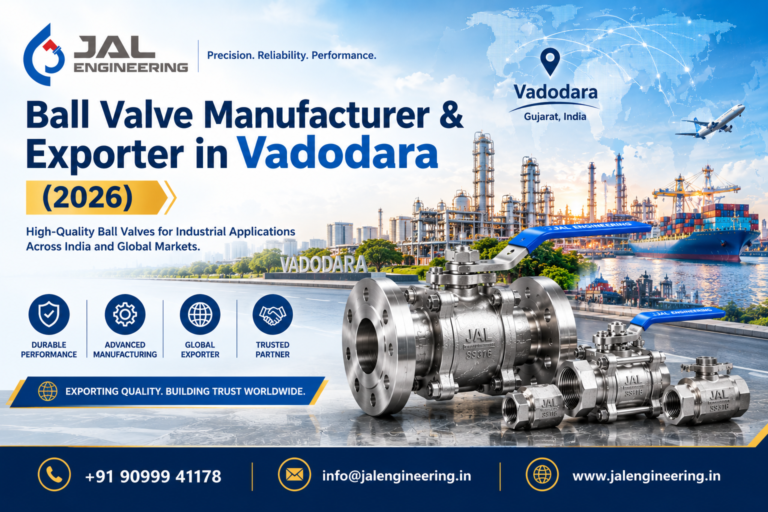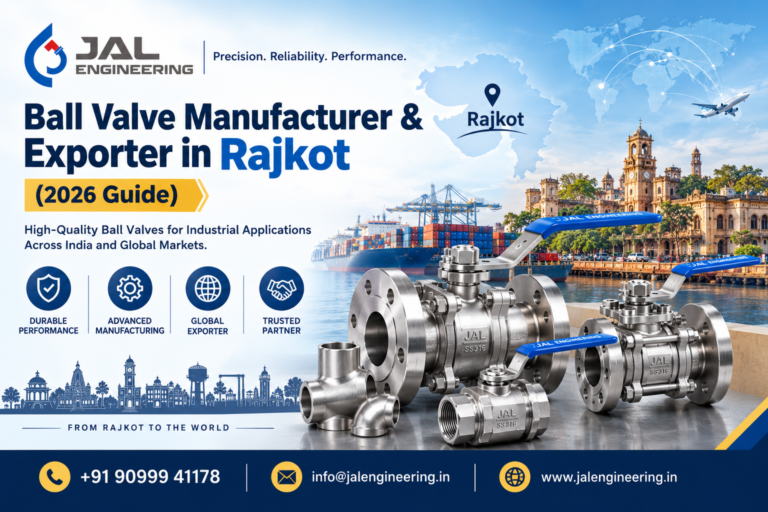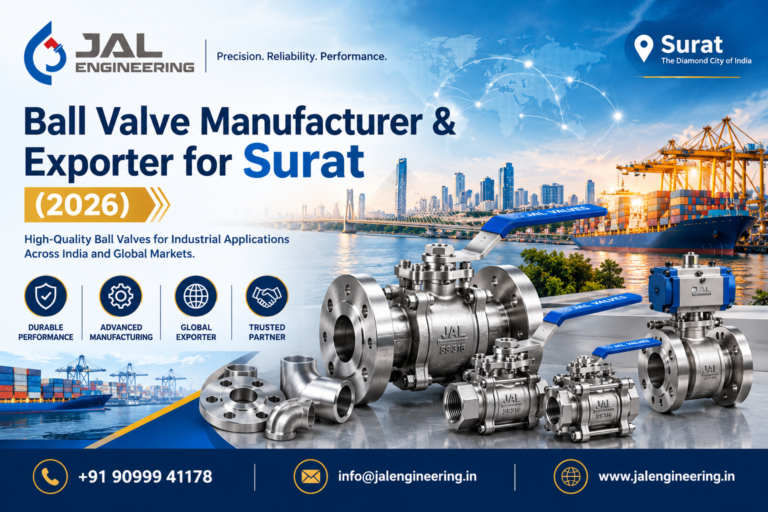
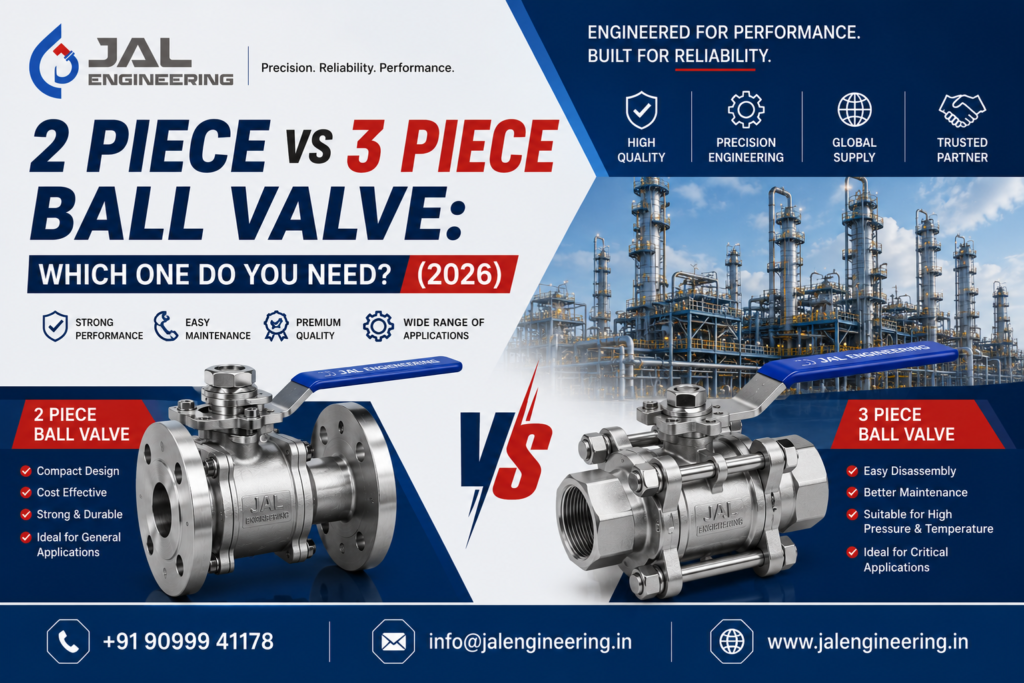
A 2-piece ball valve has a two-part body (a main body plus one end cap) that is compact and economical but must be fully removed from the pipeline for internal maintenance, while a 3-piece ball valve has a separate center section held by two end connectors, allowing the ball, seats, and seals to be serviced or cleaned without disturbing the surrounding pipework.
Body design is one of the most overlooked specs when buyers order ball valves — most focus on material and pressure rating, then get stuck later during maintenance because the valve can’t be serviced in-line. This guide explains the difference between 2-piece and 3-piece ball valves so you order the right one the first time.
Last updated: July 2026
What Is a 2-Piece Ball Valve?
A 2-piece ball valve is built from two body sections that are bolted or screwed together, with the ball, stem, and seats assembled inside before the two halves are joined. Once assembled, the body is a single sealed unit.
Key characteristics:
- Fewer parts, simpler and more compact construction
- Lower cost compared to 3-piece design
- Lighter weight, easier to install in tight spaces
- To service internal parts, the entire valve must be unbolted from the pipeline
What Is a 3-Piece Ball Valve?
A 3-piece ball valve consists of a center section (holding the ball and seats) plus two end connectors that bolt onto either side of it. The end connectors stay welded or fixed to the pipeline permanently, while the center section can be unbolted and removed independently.
Key characteristics:
- Center section can be removed for cleaning, inspection, or seat replacement without cutting into the pipeline
- End connectors remain fixed, so realignment isn’t needed after servicing
- Preferred where hygiene, frequent cleaning, or fast turnaround matters
- Slightly higher cost due to extra components and machining
2-Piece vs 3-Piece Ball Valve: Side-by-Side Comparison
| Parameter | 2-Piece Ball Valve | 3-Piece Ball Valve |
|---|---|---|
| Body Construction | Two bolted/threaded sections | Center section + two end connectors |
| Maintenance | Requires full valve removal from line | Center section removable, end pieces stay in place |
| Installation Disruption | Higher — pipeline must be realigned after reinstall | Lower — end connectors stay fixed to pipe |
| Cost | Lower | Slightly higher |
| Best Applications | General industrial use, utility lines, budget projects | Food, pharma, chemical dosing — frequent cleaning/inspection needs |
| Downtime for Servicing | Longer | Shorter |
| Common Sizes | 1/4″ to 4″ | 1/4″ to 6″ |
Which One Should You Choose?
Use this quick decision guide:
- Choose a 2-piece ball valve if: the application doesn’t need frequent internal servicing, budget is a priority, and the valve is in an easily accessible line.
- Choose a 3-piece ball valve if: your process involves food, pharma, or chemicals where the valve needs regular cleaning or inspection, or if minimizing pipeline downtime during maintenance matters.
- Consider total cost of ownership, not just upfront price — a 3-piece valve often costs less over its lifetime in applications with frequent maintenance, since it avoids repeated pipe cutting or realignment.
Material and Standards (Applicable to Both Types)
Both 2-piece and 3-piece ball valves are commonly manufactured in:
- SS304 / SS316 / SS316L for corrosion-resistant industrial, food, and pharma applications
- Carbon Steel (WCB) for standard utility and general industrial use
- Brass for lower-cost water and HVAC lines
Regardless of body type, always verify:
- ASME/ANSI B16.34 pressure-temperature compliance
- Mill Test Certificates (MTC) for the raw material batch used
- End connection type — threaded, socket weld, or flanged — matches your pipeline
- Seat material (PTFE/RPTFE) suited to your process temperature and media
Related Reading
To choose the complete valve specification, also check how the ball is supported internally:
- Floating vs Trunnion Ball Valve: Key Differences Explained
- Ball Valve Manufacturer in India: Complete Buying Guide
Manufacturing Both Types: JAL Engineering
JAL Engineering, based in Ahmedabad, manufactures both 2-piece and 3-piece ball valves in SS304, SS316, and SS316L grades, with threaded, socket weld, and flanged end connections. Our team can help you decide the right body design based on your maintenance needs and process environment before you place an order.
Get expert help choosing the right valve →
Frequently Asked Questions
Q1. What is the main difference between a 2-piece and 3-piece ball valve? The main difference is serviceability: a 2-piece ball valve must be removed entirely from the pipeline for internal maintenance, while a 3-piece ball valve has a removable center section that can be serviced without disturbing the end connectors fixed to the pipe.
Q2. Which is more expensive, a 2-piece or 3-piece ball valve? A 3-piece ball valve is generally slightly more expensive upfront due to its extra components and machining, but it can be more cost-effective over time in applications needing frequent maintenance since it avoids repeated pipe cutting.
Q3. Is a 3-piece ball valve better for the food and pharma industry? Yes, a 3-piece ball valve is typically preferred in food and pharma applications because the center section can be removed quickly for cleaning and inspection without disrupting the surrounding pipeline, supporting stricter hygiene requirements.
Q4. Can 2-piece ball valves be repaired without removing them from the pipeline? No, most 2-piece ball valves require full removal from the pipeline for internal repairs or seat replacement, since the body is a single sealed unit once assembled.
Q5. What sizes are available in 2-piece and 3-piece ball valves? 2-piece ball valves are commonly available from 1/4″ to 4″, while 3-piece ball valves are typically available from 1/4″ to 6″, though exact ranges vary by manufacturer.
Q6. Do 2-piece and 3-piece ball valves come in stainless steel? Yes, both designs are commonly manufactured in SS304, SS316, and SS316L, which are widely specified for industrial, chemical, food, and pharmaceutical applications requiring corrosion resistance.
Need help selecting between a 2-piece or 3-piece ball valve for your project? Contact JAL Engineering for a technical recommendation and quote.