Click here
Lorem ipsum dolor sit amet, consectetur adipiscing elit. Ut elit tellus, luctus nec ullamcorper mattis, pulvinar dapibus leo.

Slip on Flanges

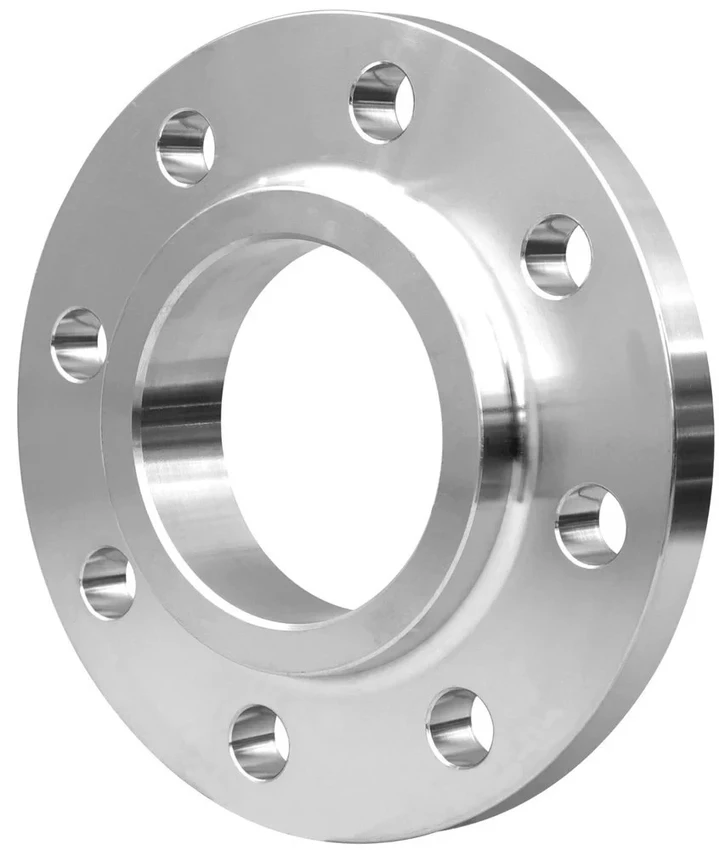
The slip-on flange (SO flange) features an oversized bore that slides directly over the pipe OD and is secured with dual fillet welds – one on each face – for reliable, leak-resistant joints. Available in carbon, alloy, and stainless steel grades, it suits low-to-medium pressure fluid systems across oil & gas, water treatment, and chemical processing. Cost-effective forged construction, multi-face options (RF/RTJ), and full ASME B16.5 compliance make it a preferred export-grade piping component.
SOCIAL SHARE:
Facebook
Twitter
LinkedIn

Description

The slip-on flange (SO flange) features an oversized bore that slides directly over the pipe OD and is secured with dual fillet welds – one on each face – for reliable, leak-resistant joints. Available in carbon, alloy, and stainless steel grades, it suits low-to-medium pressure fluid systems across oil & gas, water treatment, and chemical processing. Cost-effective forged construction, multi-face options (RF/RTJ), and full ASME B16.5 compliance make it a preferred export-grade piping component.

Reviews

There are no reviews yet.

Be the first to review “Slip on Flanges”

Your email address will not be published. Required fields are marked *

Design Features

Feature Details
Body Design Flat-faced hubbed or plate-type disc with enlarged bore; pipe slides through and is secured by dual fillet welds at inner and outer faces for a rigid, stable joint
Connection Type Slip-over bore + dual fillet weld (one inside bore, one outside hub face); compatible with RF and RTJ mating flanges per ASME B16.5
Leak Protection Double-weld assembly eliminates single-point failure; raised face or RTJ groove accommodates spiral-wound or ring-joint gaskets for enhanced sealing
Corrosion Resistance Grade-matched alloy selection — A105 for carbon service, A182 F304/316L for aggressive or corrosive media; optional galvanised or epoxy coating available
Pressure Handling Rated Class 150 through Class 2500; RTJ variant provides additional sealing integrity for elevated pressure duties; SO strength is approximately ⅔ that of weld-neck flanges
Temperature Resistance –100 °C to +550 °C depending on alloy grade; low-temperature A350 LF2 and high-alloy A182 F11/F22 grades available for extreme service
Maintenance Straightforward bolt-flange disassembly; enlarged bore allows minor pipe-end tolerance variations without re-cutting, reducing downtime during replacement
Durability Forged construction offers dense grain structure and superior tensile strength; service life approximately one-third shorter than weld-neck flanges under equivalent cyclic loading
Automation Compatibility Consistent bolt-hole pitch circle per ASME B16.5; compatible with automated orbital welding and pneumatic torque bolting systems
Industrial Standards ASME B16.5 · BS 3293 · DIN 86029 · ASTM A105 / A182 / A694 · MSS SP-44

Technical Specifications

Specification Specification
Product Type Slip-On Flange (SO Flange) — plate & hubbed variants
Size Range ½″ to 24″ standard; custom up to 60″
Material Grade ASTM A105 (CS), A182 F11/F22 (Alloy), A182 F304/L, F316/L (SS), A694 F52–F70
End Connection Slip-over bore with dual fillet weld; RF or RTJ mating face
Pressure Rating Class 150 / 300 / 400 / 600 / 900 / 1500 / 2500; PN 2.5–PN 250
Temperature Range –100 °C to +550 °C (grade-dependent)
Seat Material Gasket seat machined on flange face; spiral-wound or ring-joint gasket per ASME B16.20
Operation Type Static pipe-joint; field-welded assembly — not a valve or flow-control component
Port Type Full-bore through-hole (bore ID slightly larger than pipe OD)
Surface Finish Serrated concentric raised face; Ra 3.2–6.3 μm; RTJ groove machined to ASME B16.5
Applicable Media Water, steam, hydrocarbons, acids, gases, chemicals, LNG
Manufacturing Std. ASME B16.5, BS 3293, DIN 86029, MSS SP-44

Benefits & Application

Key Benefits Target Applications
Lower cost vs. weld-neck flanges Oil & Gas low-to-medium pressure pipelines
Easy bore-alignment during installation Chemical & petrochemical processing plants
Dual fillet weld — inner & outer sealing Water treatment & municipal distribution
Wide pressure class range (150–2500) Pharmaceutical & food-grade fluid lines
RF and RTJ face options available Power generation & steam distribution
Short pipe-cutting lead time required Pulp, paper & industrial cooling systems
Compatible with carbon, alloy & SS grades Marine, shipbuilding & offshore installations
Export-compliant per ASME / DIN / BS HVAC, fire suppression & utility piping

Testing Parameters

Test Type Description
Hydrostatic (Shell) Test Pressure applied at 1.5× rated class for minimum 30 seconds; verifies body wall integrity and weld soundness per ASME B16.5 / API 598
Pneumatic Test Inert gas or dry air at 1.1× rated pressure; used where water is not permissible; leak detection via soap-bubble or pressure decay method
Shell Test Full assembled joint subjected to rated pressure to confirm combined flange-weld-gasket assembly containment without deformation
Seat Leakage Test Mating face and gasket interface tested for zero bypass; confirms RF serrations or RTJ groove dimensions are within sealing tolerance
Pressure Endurance Test Cyclic pressure loading across rated class range to assess fatigue resistance of forged body and weld heat-affected zone
Material Inspection PMI via XRF analyser; mill test certificate (MTC) per EN 10204 3.1 / 3.2; heat and lot traceability maintained throughout production
Dimensional Accuracy 100% dimensional verification vs. ASME B16.5 / B16.47 drawings — OD, bore ID, bolt-circle diameter, raised face height, and flange thickness
Surface Finish Inspection Sealing face Ra measured per ASME B46.1; MT / PT non-destructive examination for surface cracks, laps, and seams on forged blanks
Quality Certification ISO 9001:2015 QMS; NACE MR0175 sour-service compliance available; CE marking for EU export; third-party witness inspection on request

Slip on Flanges

The slip-on flange (SO flange) features an oversized bore that slides directly over the pipe OD and is secured with dual fillet welds – one on each face – for reliable, leak-resistant joints. Available in carbon, alloy, and stainless steel grades, it suits low-to-medium pressure fluid systems across oil & gas, water treatment, and chemical processing. Cost-effective forged construction, multi-face options (RF/RTJ), and full ASME B16.5 compliance make it a preferred export-grade piping component.

Design Features

Feature Details
Body Design Flat-faced hubbed or plate-type disc with enlarged bore; pipe slides through and is secured by dual fillet welds at inner and outer faces for a rigid, stable joint
Connection Type Slip-over bore + dual fillet weld (one inside bore, one outside hub face); compatible with RF and RTJ mating flanges per ASME B16.5
Leak Protection Double-weld assembly eliminates single-point failure; raised face or RTJ groove accommodates spiral-wound or ring-joint gaskets for enhanced sealing
Corrosion Resistance Grade-matched alloy selection — A105 for carbon service, A182 F304/316L for aggressive or corrosive media; optional galvanised or epoxy coating available
Pressure Handling Rated Class 150 through Class 2500; RTJ variant provides additional sealing integrity for elevated pressure duties; SO strength is approximately ⅔ that of weld-neck flanges
Temperature Resistance –100 °C to +550 °C depending on alloy grade; low-temperature A350 LF2 and high-alloy A182 F11/F22 grades available for extreme service
Maintenance Straightforward bolt-flange disassembly; enlarged bore allows minor pipe-end tolerance variations without re-cutting, reducing downtime during replacement
Durability Forged construction offers dense grain structure and superior tensile strength; service life approximately one-third shorter than weld-neck flanges under equivalent cyclic loading
Automation Compatibility Consistent bolt-hole pitch circle per ASME B16.5; compatible with automated orbital welding and pneumatic torque bolting systems
Industrial Standards ASME B16.5 · BS 3293 · DIN 86029 · ASTM A105 / A182 / A694 · MSS SP-44

Technical Specifications

Specification Specification
Product Type Slip-On Flange (SO Flange) — plate & hubbed variants
Size Range ½″ to 24″ standard; custom up to 60″
Material Grade ASTM A105 (CS), A182 F11/F22 (Alloy), A182 F304/L, F316/L (SS), A694 F52–F70
End Connection Slip-over bore with dual fillet weld; RF or RTJ mating face
Pressure Rating Class 150 / 300 / 400 / 600 / 900 / 1500 / 2500; PN 2.5–PN 250
Temperature Range –100 °C to +550 °C (grade-dependent)
Seat Material Gasket seat machined on flange face; spiral-wound or ring-joint gasket per ASME B16.20
Operation Type Static pipe-joint; field-welded assembly — not a valve or flow-control component
Port Type Full-bore through-hole (bore ID slightly larger than pipe OD)
Surface Finish Serrated concentric raised face; Ra 3.2–6.3 μm; RTJ groove machined to ASME B16.5
Applicable Media Water, steam, hydrocarbons, acids, gases, chemicals, LNG
Manufacturing Std. ASME B16.5, BS 3293, DIN 86029, MSS SP-44

Benefits & Application

Key Benefits Target Applications
Lower cost vs. weld-neck flanges Oil & Gas low-to-medium pressure pipelines
Easy bore-alignment during installation Chemical & petrochemical processing plants
Dual fillet weld — inner & outer sealing Water treatment & municipal distribution
Wide pressure class range (150–2500) Pharmaceutical & food-grade fluid lines
RF and RTJ face options available Power generation & steam distribution
Short pipe-cutting lead time required Pulp, paper & industrial cooling systems
Compatible with carbon, alloy & SS grades Marine, shipbuilding & offshore installations
Export-compliant per ASME / DIN / BS HVAC, fire suppression & utility piping

Testing Parameters

Test Type Description
Hydrostatic (Shell) Test Pressure applied at 1.5× rated class for minimum 30 seconds; verifies body wall integrity and weld soundness per ASME B16.5 / API 598
Pneumatic Test Inert gas or dry air at 1.1× rated pressure; used where water is not permissible; leak detection via soap-bubble or pressure decay method
Shell Test Full assembled joint subjected to rated pressure to confirm combined flange-weld-gasket assembly containment without deformation
Seat Leakage Test Mating face and gasket interface tested for zero bypass; confirms RF serrations or RTJ groove dimensions are within sealing tolerance
Pressure Endurance Test Cyclic pressure loading across rated class range to assess fatigue resistance of forged body and weld heat-affected zone
Material Inspection PMI via XRF analyser; mill test certificate (MTC) per EN 10204 3.1 / 3.2; heat and lot traceability maintained throughout production
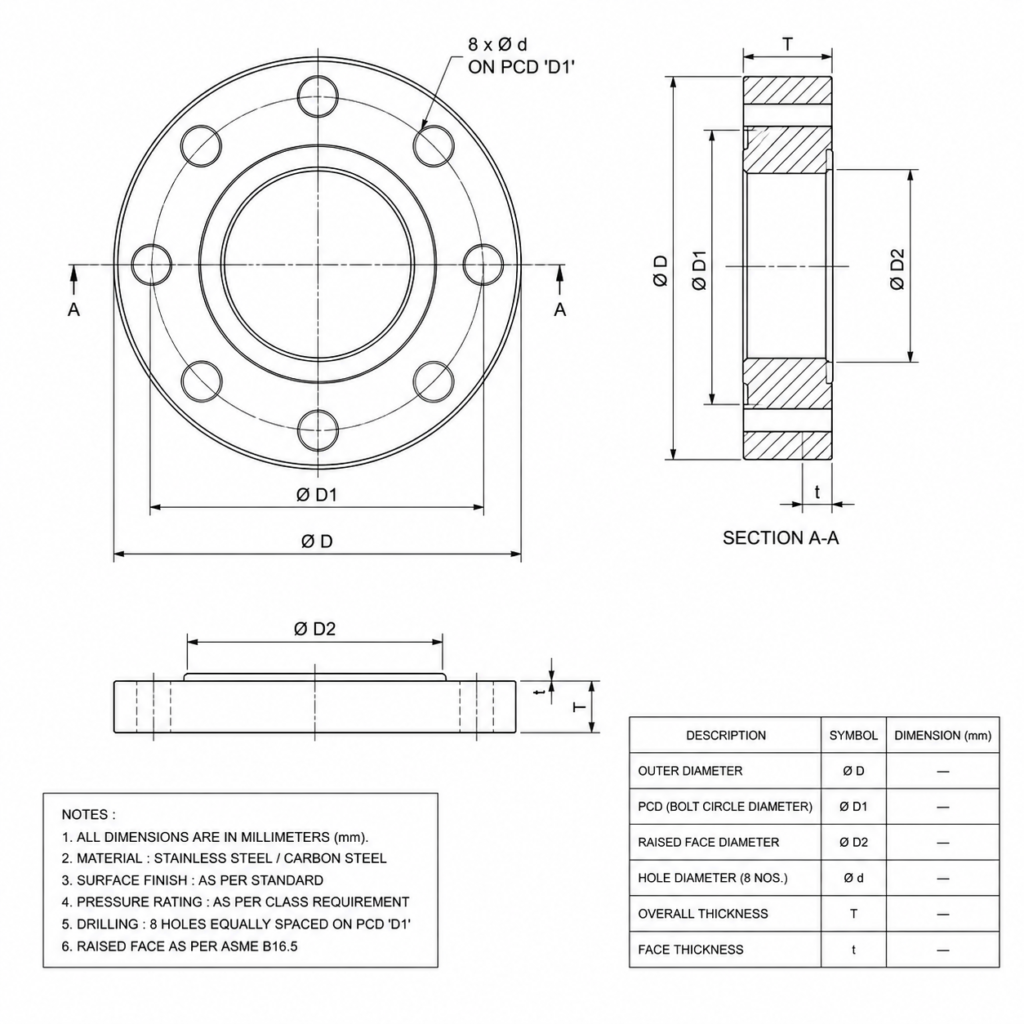
Dimensional Accuracy 100% dimensional verification vs. ASME B16.5 / B16.47 drawings — OD, bore ID, bolt-circle diameter, raised face height, and flange thickness
Surface Finish Inspection Sealing face Ra measured per ASME B46.1; MT / PT non-destructive examination for surface cracks, laps, and seams on forged blanks
Quality Certification ISO 9001:2015 QMS; NACE MR0175 sour-service compliance available; CE marking for EU export; third-party witness inspection on request

Get a Quote

Welcome to jallll la jal